Shadow AI in the Workplace: How CIOs Can Regain Control with SSE
Shadow AI in the Workplace: The New Strategic Challenge for CIOs
The rapid rise in the use of artificial intelligence in the workplace marks a clear shift in digital practices. In just a few months, these tools have become widely adopted across organizations, often without validation or oversight from IT teams.
This phenomenon, now known as Shadow AI, is an extension of Shadow IT, but with unprecedented intensity and speed. Whereas Shadow IT relied on identifiable applications, Shadow AI infiltrates everyday use through services that are instantly accessible, regardless of the user’s location.
For CIOs, the challenge is twofold: managing a diffuse and evolving risk while supporting an inevitable transformation in business practices.
What is Shadow AI?
The Shadow AI refers to the use of artificial intelligence tools outside the framework defined by the IT department. Such uses bypass the standard validation, security, and governance processes that are typically in place.
They take many forms, which are often difficult to detect:
- Using public chatbots to process or rephrase internal content.
- Integrating AI tools into business workflows without IT department approval.
- Installing AI extensions or plugins in professional browsers.
- Sending sensitive documents to external AI platforms.
Unlike traditional applications, these services require no deployment or technical integration. They can be accessed in a matter of seconds, which makes them particularly difficult to track.
Rewriting a presentation in ChatGPT… Translating a contract in DeepL… Asking an AI to summarize a meeting… Three productivity hacks. Three data leaks outside the scope.
Your EDR tool can't see them. Neither can your internet service provider.
Any copy-and-paste into a web text field, or any mouse click on a link suggested by a generative AI, represents HTTPS traffic to a potentially unauthorized domain. And yet, nothing triggers an alert at the SOC level. No alerts. No logs. Nothing.
Shadow AI is thus characterized by three key features:invisibility, immediacy, and a wide range of applications.
Why is Shadow AI gaining traction so quickly?
The adoption of Shadow AI hinges on one key factor: immediate value. While some technologies require a learning curve or integration process, generative AI delivers actionable results from the very first minutes.
Several factors account for this widespread adoption:
- Seamless accessibility, through tools that are often free or freemium.
- Immediate productivity gains on high-value-added tasks (writing, analysis, coding, proofreading).
- Increasing pressure on operational performance.
- A structural mismatch between the pace of business innovation and IT validation cycles.
In this context, employees are not deliberately breaking the rules; they are simply trying to be more efficient by using the most effective tools that are readily available.
This disconnect creates a blind spot that the IT department can no longer ignore.
The Real Risks of Shadow AI for CIOs
Shadow AI is not merely a lack of governance. It directly exposes the company to operational, security, and regulatory risks.
A major Korean conglomerate discovered this in 2023. Three incidents in less than three weeks: proprietary source code, manufacturing yield data, and the transcript of a strategic meeting—all submitted to ChatGPT by engineers looking to speed up their work. The company first limited the size of queries. Then it banned everything. The data was already gone (Le Monde, 2023).
This isn't an exception. It's the rule.
34.8% of the data submitted to AI tools in the workplace is sensitive, compared to 10.7% two years ago (Cyberhaven Labs, 2025). This includes source code, R&D data, medical records, and client memos. And 82% of these transfers go through personal accounts, outside the scope of any control (LayerX, 2025).
Exposure of sensitive data
The first risk involves the leakage of critical information. When a user submits data to an external AI service, they may unintentionally expose:
- Personal, customer, or confidential data.
- Financial and strategic information.
Even when vendors offer guarantees, in practice the IT department loses control over the data lifecycle, which leads to the following consequences.
Loss of visibility into data flows
Shadow AI introduces new outbound data flows—often encrypted and dynamic—that traditional tools cannot detect. This makes it difficult for CIOs to identify these outbound data flows, and they are often unable to control them.
This lack of transparency makes it difficult to implement a coherent security strategy.
Regulatory Risks and Compliance
The unregulated use of AI can quickly conflict with regulatory requirements. Furthermore, the lack of traceability in these tools inevitably leads to failures to meet audit and compliance requirements (GDPR, DORA, NIS2).
Shadow AI thus becomes a legal risk in its own right.
Abuses of power and governance
Finally, the lack of a regulatory framework encourages uncontrolled use:
- Automation of certain decisions without supervision.
- Production of biased or inaccurate content that could put the company in a difficult position.
- Reliance on unvalidated external tools.
These abuses raise direct questions about accountability and governance.
Why Traditional Security Models Are Outdated
Traditional security architectures are based on a perimeter-based view of the information system. They rely on knowledge of the applications and a relatively stable flow of data.
Shadow AI challenges these assumptions.
Traditional tools are reaching their limits: they struggle to identify AI services, which are increasingly integrated into legitimate third-party platforms and services (CRM systems, development tools, desktop publishing tools, etc.). Within these interfaces, they are unable to perform detailed content analysis or adapt security policies based on context.
The SSE: A Key Tool for Regaining Control
Security Service Edge (SSE) brings security controls closer to where they’re needed. It provides a unified view of access, traffic, and behavior, while enforcing consistent policies regardless of where users connect, without creating a rigid perimeter.
Ekinops’ approach is built on complementary components. TheSWG (Secure Web Gateway) controls web access, filters content, and inspects requests to identify and authorize only those recognized as legitimate through Zero Trust Internet Access (ZTIA). The CASB extends this visibility to cloud applications.
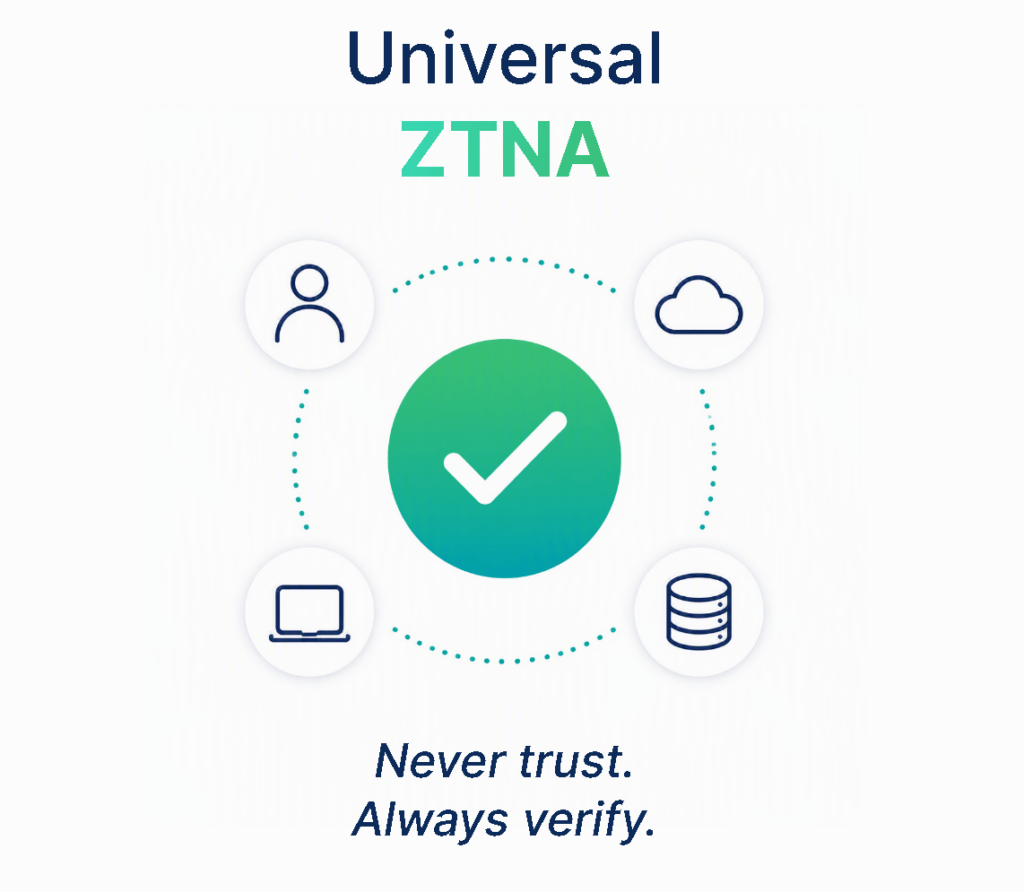
Universal ZTNA rounds out the solution by allowing access only to the applications users need for their work, regardless of how they connect (on-premises, mobile, remote work, etc.).
This combination enables precise and dynamic management of usage, balancing security, compliance, and user experience, and positions the SSE as a strategic solution to Shadow IT.
Establishing Effective Governance for Shadow AI
Shadow AI cannot be addressed through technical measures alone. It requires a comprehensive approach that combines governance, awareness-raising, and tools.
An effective strategy is built on several pillars:
- Establish a clear policy on the use of AI in the workplace.
- Raise employee awareness of data-related risks.
- Offer secure and validated alternatives.
- Rely on solutions that provide continuous visibility and control.
The goal is to transform a passive use of technology into a proactive one that is aligned with the needs of both users and organizations.
For more information, contact us to request a demo.